
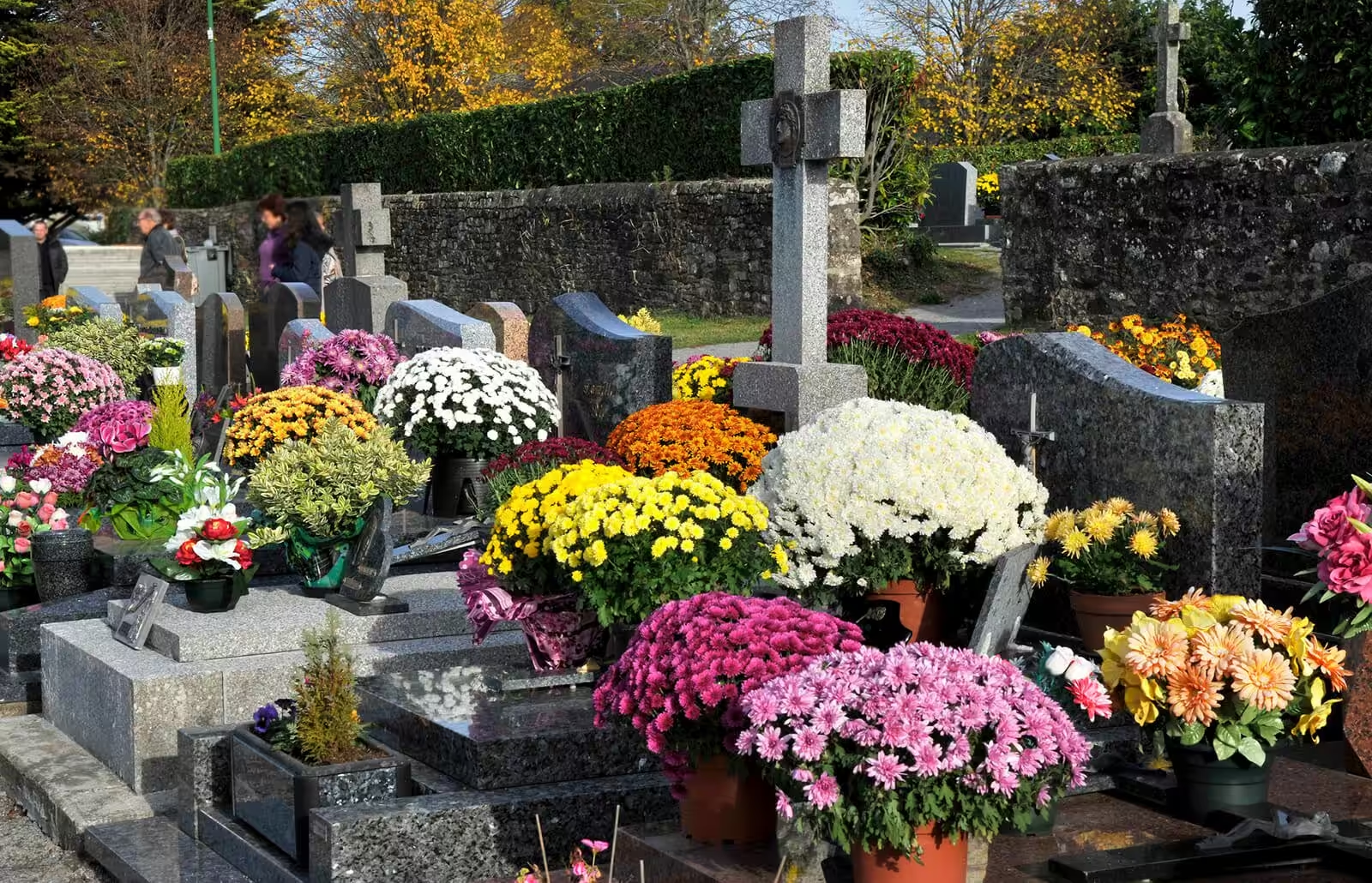
We have always expressed our deepest emotions through flowers, happy or sad. When you want to express your sympathy or condolences, sending a sympathy or funeral flower is a sincere way to comfort your sad relatives. The tradition of putting flowers in farewell rituals has been around for thousands of years, but did you know that flowers once had a very different use in funerals than they do today?
Symbolic meanings of flowers have existed in ancient times, even before the Victorians, in the Middle East, Asia, and the Americas. Turks used flowers to communicate messages in the 17th century, and rhyming words were used to encode their names. With specific flowers, the outwardly uptight Victorians expressed their passionate feelings. Besides their secret amours, the Victorians codified the flowers associated with death and funerals.
Take a look at the evolution of funeral flowers.
Flowers That Represent Death
The cultural symbol of the flower that represents death varies from culture to culture. For example, in one culture, a flower may symbolize death, but in another culture, the same flower is considered a positive symbol, such as a symbol of hope or love.
Let’s have a look at some flowers that are associated with death and what these funeral flowers signify.
Chrysanthemum

Chrysanthemums are one of the best red flowers. In the United States, this gorgeous flower has many meanings, but it is often used as an expression of support and encouragement to “get well soon.” In many European countries, chrysanthemums are flowers representing death when placed in tombs and are considered a symbol of death. By merging the more positive American implications with an emphasis on European mourning, we find the perfect balance that applies to the apocalypse. A symbol of support and encouragement, and a symbol of death and mourning, the chrysanthemum is well-suited for funerals.
Carnation

Carnation is a symbol of love. Some people believe that the word “clove” comes from the Latin word “incarnation.” This refers to the god in the body. With this in mind, we can give carnations to our families and celebrate our lives that reflect the spirit of Christ. More generally, it can express love for a family member or a deceased loved one. Carnations’ meaning and symbolism are varied and rich; they are a traditional flower for Mother’s Day, so they are a great choice to celebrate the life of someone who was a wonderful mother to their children.
Black Rose

A Black rose is an intense shade of purple or red. This unusual, rosy color is associated with death, and is one of the most meaningful types of black flowers. It’s easy to understand why this rose symbolizes death, as black is the color used to show that someone is sad. Black roses are often associated with symbols of rebirth and change, and most specifically the endings that lead to new beginnings. It signifies the feeling of sadness while also motivating us to keep loved ones in our hearts and start over.
Red Poppy

Poppies have also been associated with symbols such as death, war, the fleeting nature of life, remembrance, and sacrifice. And the red poppy, like its colour, reminds us of the bloodshed of war, which is why it is a commemorative flower for veterans. In particular, flowers have become a symbol of those who died in World War II and after World War I. And today, they are often used to pay remembrance to the lives of our loved ones, which is why these are also a common order for non-profit & charity flowers.
Orchid

Orchids are among the most popular tropical flowers, available in a variety of colours. Among many colours of orchids, pink and white are traditional orchid colors used to express sympathy and usually represent eternal love. Phalaenopsis and Dendrobium orchids are the most suitable orchid species commonly used as empathetic flowers. These flowers are a symbol of respect and long-lasting tribute, and are significant in expressing your emotions towards your loved ones.
Marigolds

The scent of these bright oranges and yellow flowers is said to attract spirits to the altar. Its bright and cheerful colors also celebrate life, not tragic death. Genuine or paper marigolds appear on altars, crosses, and garlands. Sometimes people even make a marigold path from their home to the altar. These flowers act as a bridge between life and death; they are also the birth flowers for October. So you can get happy birthday flowers to cherish your loved ones, and get them as funeral flowers to pay tribute and express remembrance.
White Rose

The unique meaning of dried white roses is intense and emotional. This fragile flower, freeze-dried in the modern world, means death is far more preferable than losing virtue. Anyone who sees these roses will pause. These flowers are often used to express the purity and innocence of the soul; they are among the most appropriate flowers to honour the virtue and memory of the souls who have departed. Due to their deep meaning, these are also an appropriate purchase for social-occasion flowers.
What Types of Flower Arrangements Can You Have?
Gifting flowers for death to show sympathy is a long tradition dating back to 60,000 BC. When sad, flowers bring a message of hope, expressing compassion, love, and warmth. Flowers that symbolize death serve a dual purpose in modern times. In other words, respect the lives of the deceased and bring comfort to the bereaved family. When choosing the type of funeral that expresses your true feelings, you have several options.
Standing Spray
The standing spray is displayed on the easel and is usually displayed next to the casket. It can only be seen from one side. Funeral sprays are usually sent to the funeral hall, but can also be sent to the church in large quantities or to bury the head.
Flower Basket
Funeral baskets give an excellent presentation and come in a variety of sizes. They may be delivered to a funeral hall for awakening, a church for religious service, or a family home.
Dish garden or plants
Dish gardens are made up of lush and colorful plants that bloom and are usually placed in baskets or decorative containers. Both the food garden and the plants are suitable for natural awakening or sending to a boarding house.
Flowers Aren’t Appropriate in Some Situations.
It is common to express sadness and respect with flowers, but sometimes it is inappropriate to send flowers. Some cultures and religions, such as Judaism and Islam, traditionally do not receive flowers. When attending Buddhist ceremonies, it is essential to know that white flowers are the traditional color choice for mourning, and red flowers are considered bad funeral etiquette. Flowers are not part of the traditional religion at Hindu funerals, as mourners are expected to arrive empty-handed without flowers or gifts. If you have any questions or concerns about the suitability of sending flowers, we recommend contacting the funeral hall or family friends and relatives who can provide appropriate guidance.
Flowers for Sympathy in the Modern Era
Today’s families make more eclectic choices when decorating for memorials and funerals. Choosing the deceased’s favorite flower is always appropriate to honor their life and memory. Stargazer lilies have been very popular with people looking for something new over the last few decades. These bold flowers are bright in color and spotted, but they look elegant and peaceful when placed around the casket. The White Spathiphyllum has enjoyed 30 or 40 years of burial and sympathy. Often given as a live potted plant rather than a cut bouquet. Many have turned to Buddhism and other spiritual traditions for inspiration, and orchids and water lilies have become widely used in modern funerals worldwide.
Conclusion
Flowers aren’t just for celebrations; they are equally significant and honest for situations when your words feel short to express what your heart wants to say. And flowers for a funeral truly do that, they aren’t just a token, they convey the emotions that those loved ones were truly close, and you are still here. The death flowers aren’t just traditions; they are a way to keep people present after they are gone.
And if you are also not able to express your deep condolences in such tough situations. You must get these flowers representing death from Southside Blooms, as they not only deliver flowers but also pack your emotions into them, sharing your feelings while providing fresh flowers personalised according to you.
FAQs
Which Flowers Are For Funerals?
There are several flowers associated with death & funerals and are used for their depth of meaning and significance, such as carnations, chrysanthemums, gladioli, orchids, roses, tulips, and more.
What Flowers Not To Send When Someone Dies?
When sending flowers to someone close who has passed away, you need to be extra careful, as flowers carry a variety of meanings. Try not to send flowers like yellow roses, bright red roses, or tulips, as these are generally associated with celebrations.
When To Give Flowers After Death?
If you want to give flowers after someone’s death, you can send them as soon as you hear about it. Just ensure that you don’t send them too early or too late; they must reach the funeral home at atleast by the day of the service.
What Colour Flowers For Condolences?
White is generally considered the most common colour for sympathy flowers, as white is the significator of peace, innocence, and virtue. Thus, white-colored flowers are a viable option to pay remembrance to the dead.
How To Choose Flowers For Funerals?
When choosing flowers for funerals, you must consider your relationship with the deceased, pay attention to the colour and meaning of the flowers, and give them at the right moment.
What Flower Symbolises Goodbyes?
Flowers hold a variety of symbols and connotations; specific flowers convey certain emotions. And flowers that symbolise goodbyes include white lilies, marigolds, orchids, chrysanthemums, gladiolus, and roses.
